Evaluating Color Bingo Game for Kids Playing as an Educational Resource
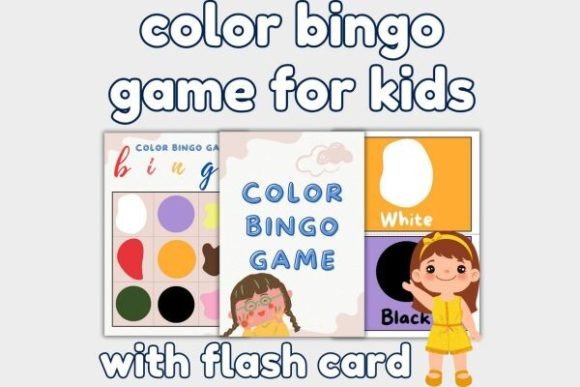
When selecting early learning materials, educators and parents often seek resources that balance engagement with developmental appropriateness. The Color Bingo Game for Kids Playing represents a streamlined approach to color recognition activities, designed specifically for preschoolers, kindergarteners, and first graders. Unlike complex board games or digital applications, this printable resource focuses on foundational skills through a familiar mechanic. For professionals evaluating educational assets, understanding the practical utility, production quality, and instructional value of this specific 17-page PDF and JPG package is essential for determining its fit within a curriculum or home learning environment.
Core Components and Material Specifications
The effectiveness of any printable game relies heavily on the completeness and organization of its assets. This resource provides a compact yet comprehensive set of materials totaling 17 pages. The package includes 18 distinct game boards, which allows for simultaneous play in small groups or classroom clusters without requiring excessive printing. This ratio of boards to page count suggests efficient layout design, minimizing paper waste while maximizing utility.
Crucially, the set includes 10 dedicated color flashcards that serve as the primary interaction mechanism. These are not merely decorative; they function as the caller’s prompts, replacing abstract verbal commands with visual cues. For early learners, associating a spoken word with a visual symbol reinforces dual-coding theory in memory retention. The inclusion of clear instructions ensures that facilitators can implement the game immediately without ambiguity. The availability of both PDF and JPG formats offers flexibility; PDFs are generally preferred for crisp text and vector-like scaling during printing, while JPGs may be useful for digital display on tablets or interactive whiteboards if physical printing is not an option.
Instructional Mechanics and Workflow
The gameplay loop is intentionally simple, reducing cognitive load associated with rule comprehension so children can focus entirely on the learning objective. The standard procedure involves distributing one board per player and placing flashcards face down. A designated caller reveals a card and announces the color. Players must then identify and cover the corresponding space on their board. The first participant to cover all spaces achieves victory.
From a pedagogical perspective, this structure supports several key developmental milestones simultaneously:
- Color Discrimination: Moving beyond simple naming to active identification under mild time pressure.
- Fine Motor Development: The act of picking up markers and placing them precisely on grid squares refines pincer grasp and hand control.
- Hand-Eye Coordination: Visually scanning the board and physically responding requires integrated sensory processing.
- Sustained Attention: Waiting for turns and monitoring the caller fosters concentration and impulse control.
For facilitators, the workflow is low-friction. There is no setup time beyond printing and cutting, and cleanup is equally rapid. This efficiency makes it a viable transition activity or filler between more intensive lessons.
Practical Value in Real-World Settings
Evaluating the Color Bingo Game for Kids Playing requires looking beyond the description to actual performance in educational contexts. In a preschool setting with four to six students, the 18-board capacity is more than sufficient. However, in larger kindergarten classes, facilitators may need to print multiple copies or rotate groups. The simplicity of the design means that re-printing is cost-effective, but users should factor ink consumption into their planning. Because color fidelity is paramount for this specific game, laser printing is often superior to inkjet to prevent smudging or color shifting that could confuse learners.
Durability is another practical consideration. Standard paper will degrade quickly with repeated handling by young children. Laminating the game boards and flashcards is highly recommended to extend the lifespan of the asset. Alternatively, sliding boards into clear sheet protectors allows for dry-erase marker use, transforming a single-use consumable into a reusable station activity. This adaptability significantly increases the long-term return on investment for educators operating on limited budgets.
The reliance on a peer or adult caller introduces a social dynamic that purely solo activities lack. When an adult acts as the caller, they can scaffold learning by asking guiding questions ("Is this red or blue?") rather than simply stating answers. When peers take turns calling, it builds confidence and public speaking skills in a low-stakes environment. This versatility makes the game suitable for differentiated instruction, accommodating varying skill levels within the same group.
Audience Fit and Use Case Analysis
Not every resource suits every context. This Color Bingo variant is best suited for specific audiences and scenarios:
Ideal Users:
- Preschool Educators: As a center activity or circle time reinforcement.
- Homeschool Parents: For structured play that feels like fun rather than drill-based learning.
- Speech-Language Pathologists: As a tool for receptive language practice and vocabulary building.
- Childcare Providers: For rainy day activities that require minimal prep and supervision.
Less Suitable Contexts:
- Advanced Early Readers: Children who have already mastered basic colors may find the challenge insufficient unless modified.
- Large Group Instruction: Without modification, managing 20+ individual boards can become chaotic.
- Digital-Only Environments: While JPGs exist, the tactile component is central to the fine motor benefits; screen-based play diminishes this aspect.
Professionals should also consider the cultural and linguistic context. If working with multilingual learners, the flashcards provide an excellent anchor for teaching color vocabulary in multiple languages. Facilitators can label cards bilingually or use the visual nature of the game to bridge language gaps without translation dependency.
Quality Assessment and Limitations
While the Color Bingo Game for Kids Playing offers solid foundational value, objective evaluation requires acknowledging limitations. The 10-color set covers primary and secondary basics but may not include nuanced shades (teal, magenta, etc.) that some curricula introduce earlier. Users should verify alignment with their specific learning standards before adoption. Additionally, the static nature of printed boards means variety depends entirely on the 18 provided designs. Over extended periods, repetition may reduce engagement. Creative facilitators can mitigate this by introducing new markers, changing winning patterns (e.g., four corners, diagonal lines), or integrating thematic elements like seasonal colors.
Presentation quality in downloadable resources varies widely. Buyers should preview sample pages when possible to ensure graphics are professionally rendered rather than clip-art dependent. Clear contrast between background and color swatches is critical for accessibility, particularly for children with visual impairments or color vision deficiencies. High-quality versions will use distinct patterns or labels alongside color fills to support inclusive participation.
Finally, consider the integration potential. This game functions best as part of a broader color unit rather than a standalone solution. Pairing it with art projects, nature walks, or sorting activities creates a cohesive learning experience. The bingo game serves as assessment and reinforcement, while other activities provide exploration and discovery. Understanding this role prevents over-reliance on a single tool and ensures balanced instructional design.
Making the Acquisition Decision
For adults aged 20–50 managing educational responsibilities, time and budget are finite resources. The Color Bingo Game for Kids Playing presents a low-risk, high-reward option when immediate, ready-to-use materials are needed. Its strength lies in simplicity and focus; it does one thing well without unnecessary complexity. The 17-page scope indicates a targeted product rather than an overwhelming bundle, making it digestible and quick to implement.
Before purchasing, assess your current inventory. If you already possess extensive color games, evaluate whether this specific version offers unique boards or superior design. If gaps exist in your fine motor or color recognition toolkit, this resource likely fills them efficiently. Consider also the age range of your learners; while marketed to first graders, the core mechanics skew toward preschool and kindergarten readiness. First-grade application may require adaptation or use as remedial support rather than primary instruction.
Ultimately, the value proposition centers on usability. A well-designed printable game saves hours of creation time while providing reliable, repeatable engagement. When evaluated against these criteria, this Color Bingo resource demonstrates practical merit for professionals seeking dependable, developmentally appropriate materials. The combination of adequate board quantity, clear instructional support, and format flexibility positions it as a functional addition to early childhood education arsenals, provided users approach it with realistic expectations about scope and longevity.