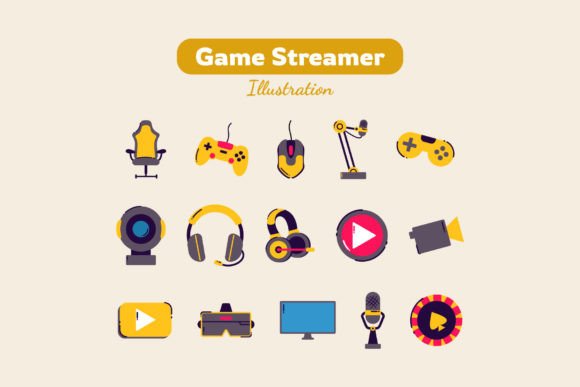
Game Streamer Illustration: Visual Identity Guide
Dive into the dynamic world of gaming with our captivating Game Streamer Illustration. This artwork is more than just a decorative element; it is a strategic visual asset designed to communicate the high-energy, interactive nature of modern digital entertainment. For content creators, brand strategists, and designers targeting the gaming demographic, this illustration serves as an immediate signifier of culture and community. It captures the electrifying energy of live broadcasting and competitive play, translating abstract concepts like "skill" and "immersion" into a tangible graphic format that resonates with audiences aged 20 to 50.
When integrating this piece into a broader brand identity, it functions similarly to a specialized display font. Just as a bold modern typography choice can dictate the tone of a landing page, the Game Streamer Illustration sets the emotional temperature for your entire project. It bridges the gap between technical proficiency and creative expression, making it an essential component for streamers looking to professionalize their channels or marketers aiming to connect authentically with gaming enthusiasts without resorting to tired stereotypes.
Defining the Aesthetic and Cultural Resonance
The visual characteristics of the Game Streamer Illustration are rooted in the current zeitgeist of online entertainment. Unlike generic tech graphics, this artwork embodies the specific personality of the streaming ecosystem. It balances the sleekness of digital interfaces with the organic chaos of live interaction. The style typically incorporates vibrant color palettes, dynamic motion lines, and character expressions that convey focus and excitement. This creates a sense of movement even in static formats, which is crucial for maintaining engagement across various media.
For designers and publishers, understanding this aesthetic is key to successful application. The illustration avoids the overly juvenile tropes often associated with gaming merchandise, opting instead for a polished, semi-realistic or stylized vector approach that appeals to adult gamers and industry professionals. This maturity in design allows the artwork to function effectively in commercial contexts, from editorial design features on esports to sophisticated packaging design for peripheral hardware. It signals that the brand respects the intelligence and taste of its audience, elevating the perceived value of the associated product or service.
Strategic Applications Across Digital and Print Media
Versatility is the hallmark of any premium design asset, and the Game Streamer Illustration excels in diverse environments. Its primary home is naturally within the streaming ecosystem, where it enhances channel branding, overlay designs, and transition screens. However, its utility extends far beyond Twitch or YouTube. Entrepreneurs and small business owners can leverage this artwork to add thematic relevance to non-gaming products that target the same demographic, such as energy drinks, apparel, or tech accessories.
- Social Media Graphics: Use the illustration as a focal point in Instagram carousels or Twitter headers to stop the scroll. The detailed artistry encourages closer inspection, increasing dwell time and engagement rates compared to text-only posts.
- Web Design and Landing Pages: Incorporate the artwork in hero sections to instantly establish context. When paired with a clean sans serif font for body copy, the illustration provides necessary visual contrast, guiding the user’s eye through the page hierarchy.
- Merchandise and Apparel: The intricate details translate well to screen printing and embroidery. Because the composition is balanced, it works on both dark and light fabrics, making it ideal for limited-edition drops or creator store inventory.
- Editorial and Blog Content: Break up long-form articles about gaming trends or hardware reviews with this illustration. It acts as a visual anchor, improving readability and keeping readers engaged through dense informational content.
In print applications, such as event flyers or magazine spreads, the illustration maintains its integrity at various scales. This scalability is vital for marketers who need a single asset to work across a business card and a convention banner. The artwork’s inherent dynamism ensures it never looks pixelated or amateurish when enlarged, preserving the professionalism of your commercial font and layout choices.
Enhancing Hierarchy and Audience Engagement
Visual hierarchy is not solely the domain of typography; illustrative elements play a critical role in directing attention. The Game Streamer Illustration acts as a high-weight visual element, similar to a heavy serif font headline. When designing layouts, treat the illustration as a primary navigation cue. Place it adjacent to your most important call-to-action or key messaging to create an associative link between the excitement of the art and the value of your offer.
This strategic placement influences brand perception by associating your message with the positive emotions evoked by the artwork. For bloggers and content creators, this means higher retention. For e-commerce sites, it can reduce bounce rates by immediately confirming to visitors that they are in the right place. The illustration validates the user's interest, creating a subconscious trust that the content or product will meet their specific cultural expectations. This level of targeted engagement is difficult to achieve with stock photography, which often lacks the nuanced understanding of gaming subcultures that this custom artwork provides.
Practical Guidance for Integration and Licensing
Selecting and implementing the Game Streamer Illustration requires the same diligence as choosing a premium font. Before downloading or purchasing, evaluate the file formats included. Vector formats (AI, EPS, SVG) are non-negotiable for professional work, allowing you to recolor elements to match your existing brand identity or adapt the piece for different seasonal campaigns. Raster files should be high-resolution (300 DPI minimum) for print use. Always verify that the license covers your intended use case; a personal license may suffice for a hobbyist streamer, but entrepreneurs and agencies must secure commercial rights to avoid legal pitfalls.
Testing pairings is equally important. While the illustration is visually rich, it should not compete with your logotype or essential UI elements. Experiment with negative space around the artwork to let it breathe. If your background is busy, consider using a simplified version of the illustration or adjusting opacity. Pairing this detailed art with a minimalist script font or geometric sans serif often yields the best results, as the typographic simplicity offsets the illustrative complexity. Avoid pairing it with other highly detailed textures or grunge effects, which can create visual noise and reduce legibility.
Evaluating Project Fit and Long-Term Value
Not every project requires this level of thematic specificity. Assess whether your audience actually identifies with gaming culture before committing to this aesthetic. For general tech or lifestyle brands, the illustration should be used as an accent rather than the foundation. However, for niche projects, it offers unmatched efficiency in communication. Instead of writing three paragraphs explaining that your product is "for gamers," the illustration communicates this instantly.
Consider the longevity of the asset. Gaming trends shift rapidly, but the core spirit of competition and community remains constant. The Game Streamer Illustration focuses on these timeless elements rather than fleeting memes or specific game titles. This makes it a sustainable investment for your creative library. By focusing on the enduring appeal of skilled gameplay and interactive entertainment, you ensure that your visual assets remain relevant through multiple rebrands and platform updates. Ultimately, this artwork is a tool for storytelling, helping you craft narratives that feel authentic, energetic, and professionally executed.